When Good Medication Goes Bad: How Storage Conditions Silently Undermine Your Anxiety Treatment
You filled your prescription on time. You took your medication as directed. Yet something feels off — the relief that once came reliably now seems inconsistent, blunted, or simply absent. Before assuming your body has developed a tolerance or that your prescription needs adjustment, there is one factor most patients never think to examine: where and how their medication has been stored.
Pharmaceutical degradation is a well-documented phenomenon in clinical pharmacology, yet it rarely enters the conversation between patients and their prescribers. For individuals managing anxiety with medications such as hydroxyzine (Atarax), the consequences of improper storage can be subtle but clinically meaningful. Understanding the science behind drug stability — and the common household mistakes that accelerate deterioration — may be the missing piece in your treatment puzzle.
The Chemistry of Degradation: Why Medications Change Over Time
Every pharmaceutical compound is, at its core, a collection of molecules engineered to interact with specific receptors in the human body. Those molecules are not inert. They respond to their environment, and under the wrong conditions, they undergo chemical reactions that alter their structure — and by extension, their therapeutic function.
The primary environmental culprits are heat, humidity, light, and oxygen. Heat accelerates molecular breakdown through a process known as thermolysis. Humidity triggers hydrolysis, a reaction in which water molecules cleave chemical bonds within the drug compound. Light — particularly ultraviolet radiation — initiates photodegradation, breaking down light-sensitive molecules into inactive or, in rare cases, potentially harmful byproducts. Oxygen exposure can cause oxidation, another form of molecular destabilization.
For a medication like hydroxyzine, which works by blocking histamine H1 receptors in the central nervous system to produce its anxiolytic and sedative effects, any structural compromise to the active molecule can reduce its binding affinity — meaning less of the drug successfully engages with its target receptors. The result is diminished clinical effect, even when the dose appears unchanged.
The Bathroom Cabinet Problem
Perhaps the most widespread storage mistake made by American patients is keeping medications in the bathroom medicine cabinet. This location is so culturally ingrained — the very name implies it is the appropriate place — that few people question the practice. The reality, however, is that bathrooms are among the worst possible environments for pharmaceutical storage.
Showers and baths generate significant humidity. Temperature in a bathroom fluctuates repeatedly throughout the day as hot water is run, steam accumulates, and the room cools again. This cycle of heat and moisture exposure is precisely the condition most likely to accelerate drug degradation. Studies examining medications stored in high-humidity environments have documented measurable potency loss within weeks, depending on the compound and its formulation.
The kitchen is similarly problematic. Storing medications near a stove, dishwasher, or window exposes them to heat spikes and steam — the same degradation triggers as the bathroom, with the added risk of light exposure near windows.
What Proper Storage Actually Looks Like
The standard pharmaceutical guidance — found on most prescription labels — recommends storing medications at controlled room temperature, typically defined as between 68°F and 77°F (20°C to 25°C), in a dry location away from direct light. In practice, this translates to a few specific household locations.
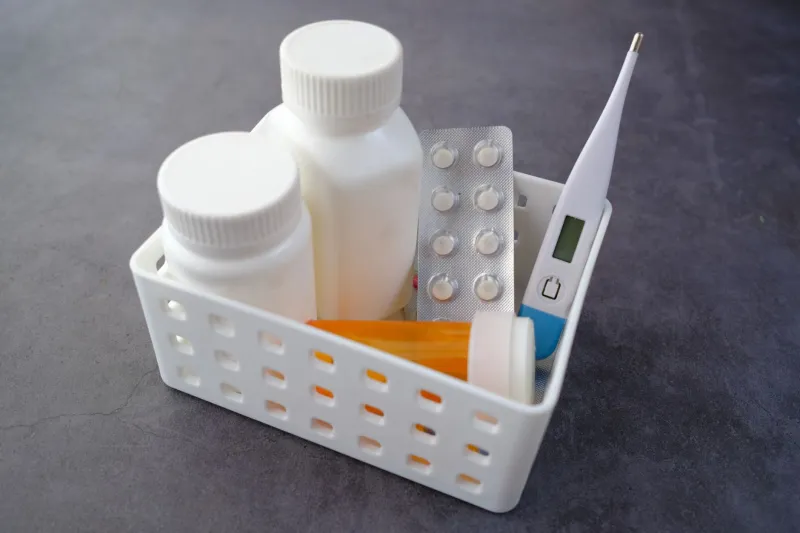
A bedroom dresser drawer, a hallway closet shelf, or a dedicated storage box kept in a consistently temperate room are all reasonable choices. The key criteria are stability — meaning the location does not experience significant temperature swings — and low humidity. A small, opaque container with a secure lid adds an additional layer of protection against both light and moisture.
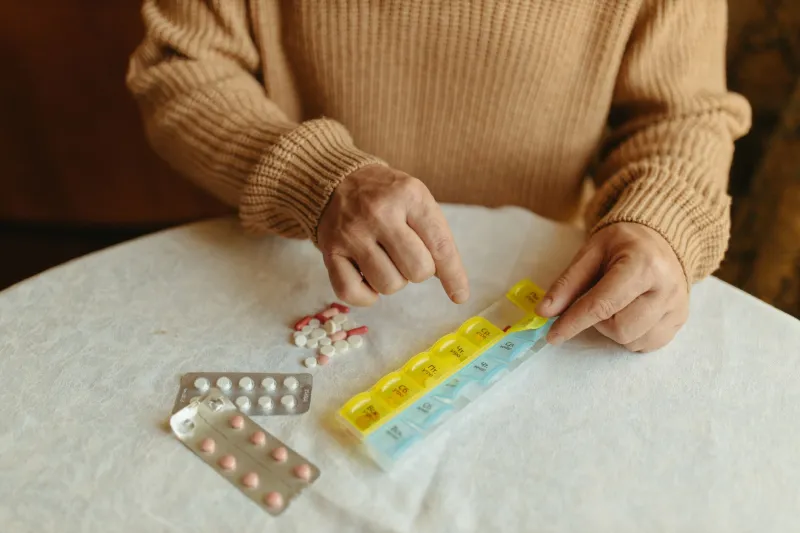
For patients who use weekly pill organizers, it is worth noting that transferring medication from its original container into a plastic organizer can increase exposure to air and ambient humidity. If you use a pill organizer, keep it in a cool, dry drawer rather than on a countertop, and avoid loading it more than one week in advance.
Refrigeration is appropriate only for medications specifically labeled as requiring it. For most oral anxiety medications, refrigerator storage can introduce its own problems: condensation forms on tablets or capsules when they are removed from a cold environment and exposed to room-temperature air, accelerating moisture-related degradation.
Recognizing the Signs That Your Medication May Have Degraded
Because chemical degradation is invisible and odorless in most cases, patients often have no direct way to confirm that their medication has lost potency. There are, however, indirect indicators worth noting.
Visible changes in a tablet or capsule — discoloration, crumbling, unusual odor, or a chalky residue — can signal that the formulation has been compromised. Liquid formulations may show cloudiness, separation, or color changes. If you observe any of these signs, contact your pharmacist before continuing use.
Absent visible changes, the more common scenario is a gradual, unexplained reduction in therapeutic effect. If your anxiety symptoms seem to be returning or intensifying despite consistent adherence to your prescribed regimen, and if you have recently moved, changed storage locations, or experienced an unusually hot or humid season, storage conditions are worth raising with your pharmacist or prescribing physician.
It is important not to self-diagnose degradation. Reduced medication effectiveness has multiple possible explanations, including tolerance development, changes in body weight or metabolism, new stressors, sleep disruption, or the natural progression of the underlying anxiety disorder. A thorough conversation with your healthcare provider is the appropriate first step.
Expiration Dates: What They Do and Do Not Tell You
Expiration dates on prescription medications reflect the manufacturer's guarantee that the product will retain at least 90 percent of its labeled potency through that date — but only when stored under the recommended conditions. This is a critical distinction that many patients overlook.
A medication stored in a hot, humid bathroom for six months may lose meaningful potency well before its printed expiration date. Conversely, a medication stored under ideal conditions may retain acceptable potency somewhat beyond that date, though using expired medication is not recommended and should always be discussed with a pharmacist.
The expiration date is not a standalone safety guarantee — it is a conditional one, contingent on proper storage throughout the medication's life in your possession.
A Practical Checklist for Medication Storage
To help patients apply these principles concretely, consider the following storage review:
- Location: Is your medication stored away from the bathroom and kitchen? If not, identify an alternative location in a bedroom or hallway.
- Temperature: Does the storage location maintain a stable temperature between 68°F and 77°F year-round? Avoid areas near heating vents, windows, or exterior walls in climates with extreme seasonal temperatures.
- Light exposure: Is the medication kept in its original opaque container, or in a drawer or cabinet that blocks light?
- Humidity: Is the storage area consistently dry? Consider a small desiccant packet in your medication drawer if you live in a humid climate.
- Container integrity: Are caps and lids replaced tightly after each use? Is the original child-resistant container intact?
Answering these questions honestly takes less than five minutes and may reveal a straightforward explanation for treatment inconsistencies that have otherwise been difficult to account for.
The Role of Your Pharmacist
Pharmacists are an underutilized resource in the management of medication storage questions. Unlike a brief physician appointment, a conversation with your pharmacist can be initiated quickly, is typically free of charge, and draws on specialized training in pharmaceutical chemistry that directly applies to these concerns.
If you have questions about whether a specific medication has storage requirements beyond the standard guidelines, whether a recent change in your home environment may have affected your prescription, or whether a medication showing visible changes should be replaced, your pharmacist is the right first point of contact.
Effective anxiety treatment depends on more than writing the right prescription. It depends on that prescription arriving at its target receptors in the form and concentration intended. Protecting your medication from environmental degradation is, in that sense, an extension of the treatment itself — a quiet but consequential act of patient self-advocacy.